| We thank you for your interest but this event has already taken place. |
| Starting | May 31, 2012 |
| Ending | June 3, 2012 |
| Location | University of Ottawa Skills and Simulation
Centre
725 Parkdale Avenue 1st Floor
Ottawa ON K1Y4E9
Canada |
| Faculty | Course Directors
Amin B. Kassam, MD, FRCS(c)
Professor and Chief/Head
Division of Neurosurgery
University of Ottawa
Ontario, Canada
Charles Agbi, MD, FRCS(c)
Associate Professor
Department of Neurosurgery
University of Ottawa
Ontario, Canada
Martin Corsten, MD, FRCS(c)
Associate Professor
Chairman, Department of Otolaryngology
University of Ottawa
Ontario, Canada
Andre Lamothe, MD, FRCS(c)
Associate Professor
Department of Otolaryngology
University of Ottawa
Ontario, Canada |
| University of Ottawa Faculty
Vasco F. Da Silva, MSc, MD, FRCSC, FACS
Assistant Professor
Department of Neurosurgery
University of Ottawa
Ontario, Canada
Steven M. Gilberg, MD, FRCSC
Associate Professor
Chairman and Head of Ophthalmology
University of Ottawa Eye Institute, TOH
Ontario, Canada
Thanh B. Nguyen, MDCM, FRCPC
Assistant Professor
Department of Radiology
University of Ottawa
Ontario, Canada
Vivek Patel, MD
Assistant Professor
Department of Ophthalmology
University Of Ottawa Eye Institute
Ontario, Canada |
| Guest Faculty
Ricardo L. Carrau, MD, FACS
Professor
Department of Otolaryngology -
Head & Neck Surgery
OSUCCC - James
Columbus, Ohio
Daniel M. Prevedello, MD
Assistant Professor
Department of Neurological Surgery
OSUCCC - James
Columbus, Ohio
Nancy McLaughlin, MD, PhD, FRCS(c) |
| Target Audience | Neurosurgeons, otolaryngologists-head and neck surgeons and other skull base surgeons who are interested in learning endoscopic endonasal surgery of the skull base, pituitary fossa, orbit and craniocervical junction. Neurosurgeons and Neuroradiologists interested in developing further knowledge of subcortical intraaxial space and white matter tractography, and hospital administrators interested in surgical biometrics and resource optimization. |
| Description | With the recent evolution of innovative biotechnology there is a progressive convergence of these technologies to manage pathology affecting the sella, skull base and more recently the intraaxial subcortical white matter space. The confluence of these technologies has led to development of minimally invasive strategies via progressively smaller surgical corridors to reach and treat the lesion in a targeted manner. There is both a clinical and economical need to integrate these technologies and establish their value in delivering precise targeted treatment in an efficient manner while articulating these benefits through Surgical Biometrics.
While individual techniques and technologies have emerged the field is at stage, where integration into a systems approach that leads to a user-friendly method is needed to realize the full potential of each disparate component. This course takes the six pillars of Neurosurgical Innovation (Mapping, Navigation, Optics, Access, Resection and Targeted Therapy/Neoadjuvant) and offers a systems solution ("SMART Systems Approach"). The participant will be exposed systematically to each of these pillars or core competencies, in an effort to build a personalized delivery system that will create a template/guide for selecting the approach and technology required to treat the specific lesion in a targeted precise fashion, with measurable outcomes - biometrics.
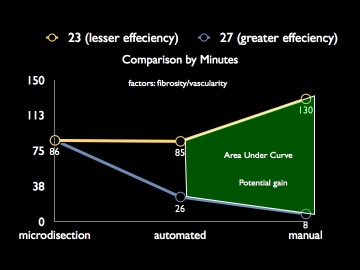
In addition, given the health care economic environment there will be an additional focus on the field of Surgical Biometrics. This is a rapidly emerging field that focuses on the impact and value added of surgical technologies. The participant will be exposed to the factors that affect surgical efficiency, patient flow, and impact on health system economics; this will allow for a critical assessment of the value added by any technology or system into a tangible deliverable, which is critical to the adaption and acquisition process.
This comprehensive course will cover current indications, limitations and surgical techniques for endoscopic endonasal surgery of the skull base, pituitary fossa, orbit and craniocervical junction. The course will also cover the indications, limitations and surgical techniques for an evolving field of intraaxial subcortical surgery using white matter mapping/tractography and the use of the brainport access system and the more recent exoscope (not endoscope) optics platform.
Our faculty will present the technical nuances and technological requirements of these surgeries, using a modular anatomical system that can be translated to the dissection laboratory. Current indications, advantages, limitations and outcomes will be discussed. The course comprises a sequence of complementary didactic lectures, prosections, 3-D anatomical reviews and 6 hands-on cadaver dissection. Two live surgical demonstrations (one for the endonasal approach and one for the "SMART Systems"/Brainport) will be scheduled pending logistical availability. These will be transmitted directly to the auditorium where the participants may interact with the surgeons and other members of the faculty.
 |
| Objectives | At the conclusion of this activity, participants should be able to:
Pituitary/ Skull Base
1. Understand the anatomic relationships of the sinonasal tract, orbit and ventral skull base from the endoscopic perspective (approach corridors)
2. Understand the indications and limitations of the sagittal plane expanded endonasal corridors to access the ventral skull base from the anterior skull base/pituitary fossa to the craniocervical junction
3. Identify the indications and limitations of the coronal (paramedian) plane, expanded endonasal corridors to access: orbit, pterygopalatine, infratemporal fossa and parapharyngeal space
4. Understand how to avoid and treat complications of endoscopic endonasal surgery of the skull base
5. Develop an effective strategy for tailored reconstruction using state of the art vascularized techniques
6. Assimilate and organize the corridors in concert with those afforded by conventional and minimally invasive lateral approaches, such as the keyhole surgery
7. Synthesize the principles of the extraaxial (ventral endonasal and lateral conventional/minimally invasive) corridors - "360° corridor surgery"
Subcortical Intraaxial
8. Describe the evolving technology platforms of white matter fascicular mapping and subcortical anatomy (diffusion tensor imaging)
9. Understand the technique and current limitations to accessing the lesions
10. Develop a strategy to treat these lesions via targeted surgical brainport corridors
11. Understand the principles and limitations of selecting the optimal subcortical corridor
12. Identify the current immune targeted molecular treatments available and the potential ability to deliver these in situ - "6th Pillar."
Surgical Biometrics
13. Understand the "SMART Systems" approach that provides an integration and assembly of the six pillars of innovative technologies to guide tailored corridors for specific sella, skull base and subcortical lesion.
14. Describe the efficiency factors that impact Surgical Biometrics analysis.
15. Understand the resource needs for translating technology into clinical practice and value added analysis. |
For more information
please contact | Pat Fitzwater
Phone: (805) 300-9154
Email: pat@academiceventmanagement.com |
| Refunds | Cancellations must be received in writing by March 15, 2012 and will be subject to a $200 processing fee. |
| Brochure | Link to Brochure |
| Notes | HOTEL ACCOMMODATIONS
A block of rooms has been reserved at:
Fairmont Chateau Laurier
1 Rideau Street
Ottawa, Ontario
Canada K1N 8S7
Tel +1 613 562 7079
Fax +1 613 562 7033
www.fairmont.com
HOTEL RESERVATIONS
Call 1-800-441-1414 and mention the "Kassam Course" to get a special rate of $219 per night (Canadian) plus taxes.
Or book online at: https://resweb.passkey.com/go/thekassamcourse
Cutoff date to get the special rate is April 30, 2012.
Transportation will be provided each day from the Fairmont Chateau Laurier to the course.
Other Hotel Options:
(We do not have a block of rooms at these hotels)
Travelodge Hotel Ottawa and Conference Centre
1376 Carling Avenue
Ottawa, ON K1Z 7L5 CA
Telephone: 613-722-7600
http://www.travelodgeottawa.com/index_en.aspx
Best Western MacIes Hotel
1274 Carling Ave
Ottawa, ON K1Z 7L5 CA
Telephone: 613-724-4559
http://www.bestwesternontario.com/hotels/best-western-plus-macies-hotel
|
Tuition
All amounts are in USD
Please select the appropriate tuition before continuing | $3,000.00 Lectures and 6 Labs
$5,000.00 Team of 2
$1,500.00 Didactic Only
$1,500.00 Hospital Administrators
|
| We thank you for your interest but this event has already taken place. |